
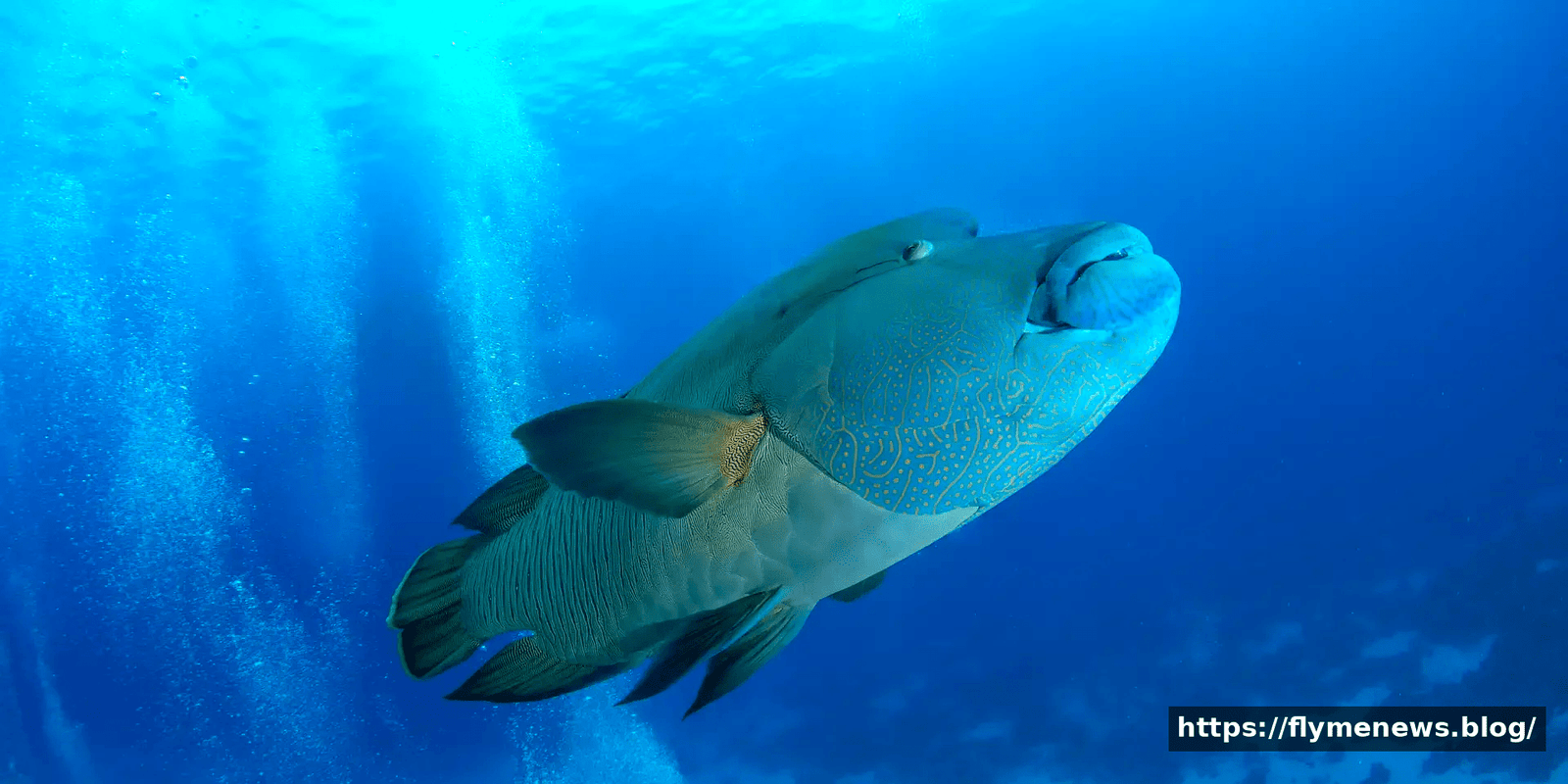
Have you ever seen a fish that looks like it’s wearing a funny hat? The Napoleon wrasse, which has a big lump on its head, is one of the most unique fish in the ocean. It swims in warm seas and is a favorite sight for divers. This fish is named after Napoleon Bonaparte. His hat had a similar shape to the fish’s forehead bump!
This huge fish is full of surprises. It can grow over six feet long and weigh as much as a motorcycle. The species can live for up to 50 years! It also changes its color and can even switch genders.
But the Napoleon wrasse has a big problem: people catch too many of them. This amazing fish is now in danger. That’s why we need to learn more about it and help protect it.
Table of Contents
What is a Napoleon Wrasse?
The Napoleon wrasse (Cheilinus undulatus) is the largest type of wrasse fish in the world. It lives in the warm waters of the Pacific and Indian Oceans. You can find them near coral reefs from the Red Sea to the islands in the Pacific.
It has a few other names, including the humphead wrasse and the Maori wrasse. The name “humphead” comes from the big, lumpy bump on its forehead. This bump gets bigger as the fish grows older.
This fish is truly one of a kind! Its big size and special look make it easy to spot underwater. It is often a highlight for scuba divers who want to see sea life.
A Closer Look at the Napoleon Wrasse
This fish is best known for its size and shape. It is a giant compared to most other reef fish.
Size and Appearance
These fish are simply huge! The biggest ones can reach over 2 meters (more than 6 feet) long. They can also weigh up to 190 kg (about 420 pounds)! That’s as heavy as a grand piano! Males are usually bigger than females. The average length for a Napoleon wrasse is a little less than one meter.
Besides their size, they have thick, fleshy lips and two black lines behind their eyes. Their color can be a dull blue-green or more vibrant shades of green and purplish-blue. As they age, the colors get more intense.
The Hump on the Forehead
The most unique feature of this fish is the hump on its head. This bump gives the fish its famous name. It becomes very noticeable on adult males. The hump reminds people of the bicorne hat that Napoleon Bonaparte often wore.
Scientists think this hump develops as the fish matures. It could be a sign of dominance or health to attract mates.
Color and Behavior
The Napoleon wrasse is a colorful fish. Adults have a mixture of blues, greens, and purples. This fish is also very curious and often friendly to divers. They usually live by themselves, but can also be seen in pairs or small groups.
They are a peaceful fish despite their size. They do not usually bother people. Divers love to see them up close because they seem so relaxed.
Where Do Napoleon Wrasses Live?
The Napoleon wrasse lives in the Indo-Pacific region. This area includes the Indian Ocean and the western Pacific Ocean.
These fish love to live in specific places.
Habitat of the Napoleon Wrasse
The Napoleon wrasse is closely tied to the coral reef. They live on coral reefs and in nearby areas. They also like to visit seagrass meadows and waters near mangroves. They rarely stray far from their reef homes.
Juvenile fish often find safety in shallow waters. Places like seagrass beds offer them protection from predators. As they grow, they move to deeper waters on the reef slope.
Key Locations
You can see these amazing fish in many places. Some of these places include Australia, Indonesia, and the Maldives. The Red Sea, especially near Saudi Arabia, is also an important home for them.
They are a protected species in several countries. This helps keep them safe from fishing.
The Life Cycle of the Napoleon Wrasse
The Napoleon wrasse has a fascinating and unique life cycle. One of the most remarkable things about them is how they can change sex.
Sex Change and Reproduction
This fish is a protogynous hermaphrodite. This is a big term that means they can change from female to male. Most start their lives as females. A female will become a male if the dominant male in the group is missing. The largest female can turn into a new male.
They reach sexual maturity very slowly. It takes them about 5 to 7 years to be ready to reproduce. When it’s time to spawn, they gather in groups or pairs. They swim quickly to the surface and release their eggs and sperm.
Lifespan and Growth
The Napoleon wrasse can live for a very long time. They can survive for up to 50 years in the wild! However, they grow very slowly. A fish can be many years old before it grows large enough to have babies.
This slow growth is one reason why they are in trouble. If too many are caught, the population can’t recover quickly.
What Does the Napoleon Wrasse Eat?
The Napoleon wrasse is an important predator on the coral reef. Their diet helps keep the reef healthy.
Diet of the Napoleon Wrasse
These fish are carnivores. They eat a variety of shellfish and invertebrates. Their favorites include oysters, sea urchins, and crustaceans. They use their strong teeth to crush hard shells. You can even hear them crunching on their food underwater!
They are one of the few creatures that eat the crown-of-thorns starfish. This starfish can destroy coral reefs. By eating them, the Napoleon wrasse protects the reef.
Role in the Ecosystem
The Napoleon wrasse is a “guardian” of the coral reef. By eating sea urchins and crown-of-thorns starfish, it protects corals. This allows the reef to stay healthy and provide a home for other fish.
Their role keeps the ecosystem in balance. Without them, coral reefs would be in big danger.
Why is the Napoleon Wrasse Endangered?
The Napoleon wrasse is a species that is facing a very high risk of extinction. They were listed as “Endangered” by the IUCN in 2004.
Their population has dropped by over 50% in the last few decades. There are two main reasons for this.
Threats from Overfishing
Overfishing is the biggest problem for the Napoleon wrasse. They are very valuable in the live reef food fish trade. They are a sought-after delicacy in some countries. A single fish can sell for up to $850.
Because they are so valuable, people catch too many of them. The illegal trade is also a big issue. Illegal fishing continues despite bans in many countries.
Impact of Fishing Methods
The way they are caught is also harmful. Some fishers use cyanide to catch them. This poison is released into the water to stun the fish. It often kills the corals and destroys the fish’s home. This method is illegal but still used in some places.
Mining in coastal areas is also a new threat. This can pollute the water and damage the reef where they live.
Conservation Efforts to Save the Napoleon Wrasse
People around the world are working hard to save the Napoleon wrasse. The goal is to stop the population from decreasing further and protect the species from extinction.
International Protection
The Napoleon wrasse is protected by international laws. It is listed in Appendix II of CITES. This means that trading the fish is strictly regulated. Countries must prove the trade will not harm the species.
The IUCN, which tracks the status of animals, lists them as “Endangered.” This is an important step. It makes the world pay attention to their plight.
Saudi Arabia’s Role
Saudi Arabia is a great example of a country trying to protect the species. The country has banned fishing for Napoleon wrasse for over a decade. They have strict fines, up to 50,000 SAR, and even prison sentences for breaking the law.
The National Center for Wildlife (NCW) leads conservation efforts in the country. They focus on monitoring and studying the fish. They also work to create more marine reserves to protect them.
Other Success Stories
In Raja Ampat, Indonesia, the population of the Napoleon wrasse is recovering. A ban on catching them in 2020 and the creation of marine protected areas helped numbers grow. This shows that conservation efforts really can work!
The Philippines and other countries are also studying the fish to learn how to protect it better.
The Future of the Napoleon Wrasse
The future of the Napoleon wrasse is uncertain, but there is hope. We can help save this gentle giant if we all work together.
Challenges Ahead
The fish still faces many challenges. Global populations have declined by up to 75% in some regions. Illegal fishing and habitat destruction continue to be major threats.
Climate change also poses a risk. Warmer waters can damage coral reefs. This can impact the home and food source of the Napoleon wrasse.
The Path to Recovery
The path to recovery requires a multi-pronged approach. It will take strong laws, better enforcement, and more protected areas. Education and awareness campaigns are also vital.
You can help by learning about the Napoleon wrasse. You can also share your knowledge with others. And most importantly, you should avoid eating them. If there is no demand, there will be less reason to fish for them.
Fun Facts About the Napoleon Wrasse
- The Napoleon wrasse is the largest living wrasse fish in the world.
- They have big, fleshy lips that look like they could give a big, smoochy kiss!
- They are one of the few animals that can eat the poisonous crown-of-thorns starfish.
- A Napoleon wrasse can live for up to 50 years, but it takes 5 to 7 years just to become an adult.
- In the Maldives, where they are protected, they are known as ‘Maa hulhun’bu lan’daa’.
Frequently Asked Questions
Q: Why is it called a Napoleon wrasse?
A: It is named after French Emperor Napoleon Bonaparte. The hump on the fish’s head looks like the bicorne hat he famously wore.
Q: How big does a Napoleon wrasse get?
A: They can grow up to 2.3 meters (over 6 feet) long and weigh up to 190 kg (about 420 pounds).
Q: What do Napoleon wrasses eat?
A: They are carnivores that eat oysters, sea urchins, and crustaceans. They are especially important because they eat the crown-of-thorns starfish, which harms coral reefs.
Q: Are Napoleon wrasses endangered?
A: Yes, they are listed as an endangered species by the IUCN. This is mainly due to overfishing and the live reef food fish trade.
Q: Can a Napoleon wrasse change its sex?
A: Yes, they are protogynous hermaphrodites. This means they are born female and can change to male later in life, often when the dominant male in the area dies.
Q: What is being done to protect the Napoleon wrasse?
A: Many countries have banned fishing for them. They are also listed in CITES to regulate trade. Marine protected areas are also being created to provide them safe homes.
Conclusion
The Napoleon wrasse is an incredible and important fish. It is a gentle giant of the sea with a unique look and special role in the ocean. It helps keep coral reefs healthy by eating creatures that would otherwise destroy them.
But this special fish is in trouble. Its biggest threat is people catching too many of them. We need to protect the Napoleon wrasse before it is too late. By supporting conservation efforts and making smart choices, we can help bring this magnificent fish back from the brink.












Leave a Reply