
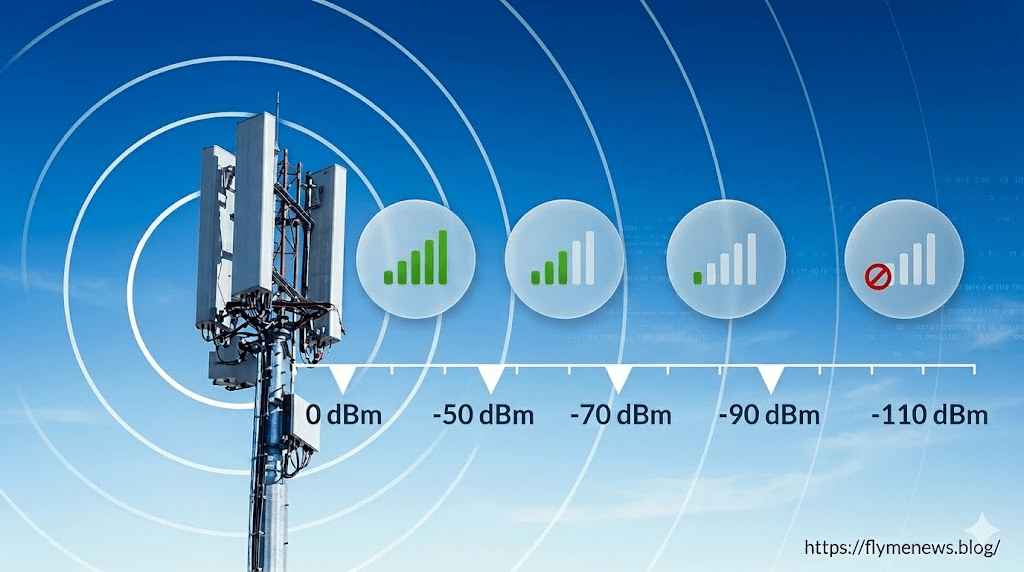
Have you ever walked into a room and watched your phone bars drop to zero? It is incredibly frustrating when your video freezes or a call drops. This happens because of something called the receive signal level. In simple terms, this is how strong the cellular or Wi-Fi signal is when it reaches your device. Think of it like listening to someone speak. If they are close, you hear them loudly. If they are far away, their voice gets very quiet.
Understanding how this wireless energy travels can help you get better service every day. Your phone is constantly shouting back and forth with a cell tower. When the shout becomes a whisper, your connection suffers. In this guide, we will break down how this technology works using simple words. You do not need to be a tech genius to understand your phone. Let us dive into the world of wireless signals together.
Table of Contents
The Basics: What Exactly Is Receive Signal Level?
The receive signal level is a measurement of power. It tells us how much energy your device actually gets from a transmitter. Transmitters are things like cell towers, Wi-Fi routers, or radio stations. Your phone has a tiny antenna hidden inside its plastic shell. This antenna listens for radio waves traveling through the air.
When the radio waves hit the antenna, they create a small electric current. The strength of this current determines your connection quality. Tech experts usually measure this power in a unit called dBm. Do not worry about the math right now. Just know that a higher number means a much stronger connection for your device.
Biography Table of Signal Metrics
| Metric Name | What It Stands For | What It Measures | Ideal Range |
| RSL | Receive Signal Level | Total power of the incoming signal | -50 dBm to -70 dBm |
| RSSI | Received Signal Strength Indicator | Overall power level of radio signal | Closer to 0 is better |
| RSRP | Reference Signal Received Power | Strength of specific LTE/5G control signals | -80 dBm or warmer |
| SINR | Signal-to-Interference-plus-Noise Ratio | Signal clarity compared to background noise | Above 15 dB |
How Do We Measure Signal Strength?
We measure the receive signal level using decibels milliwatts, or dBm for short. This scale looks a bit strange because it uses negative numbers. For example, a signal of -50 dBm is actually amazing. It means your phone is right next to the tower. On the other hand, a signal of -110 dBm is very weak.
If your phone hits -120 dBm, you will likely see the “No Service” message. It helps to think of it like a golf score where being closer to zero is a good thing. Your phone bars are just a pretty graphic representation of these tricky negative numbers. Every phone company makes up its own rules for what the bars mean.
Why Your Phone Bars Can Cheat You
You cannot always trust the bars at the top of your screen. Two different phones might show three bars in the exact same spot. However, one phone might have a much better receive signal level than the other. Phone makers use secret formulas to decide how many bars to show you.
One brand might show four bars for a medium signal to make you feel good. Another brand might be more honest and show two bars. If you want the truth, you have to look into your phone’s hidden settings menu. This reveals the true dBm number so you can see the real strength of your network.
The Big Obstacles: What Blocks Your Signal?
Have you ever wondered why your receive signal level drops when you walk inside a grocery store? Radio waves are easily blocked by heavy building materials. Concrete, brick, and metal screens are the biggest enemies of your cell phone. They act like a thick shield that absorbs the wireless energy before it reaches you.
Even natural things like trees, hills, and heavy rain can weaken the signal. If you live in a forest, the wet leaves can soak up the radio waves. This is why you often get a much better connection if you stand near a clear window or step outside onto the sidewalk.
Distance Matters: The Journey of a Radio Wave
The furthest away you travel from a cell tower, the lower your receive signal level becomes. Radio waves spread out in all directions as they travel through the sky. As the wave spreads out, its power thins out over the distance. It is just like the light from a flashlight.
The beam is bright up close but grows dim far away in the dark. If you live in a rural area, the nearest tower might be many miles away. This long distance makes it hard for your phone to catch a strong whisper of data. Moving closer to the highway or a town center usually fixes this issue quickly.
How Background Noise Hurts Your Connection
Imagine trying to talk to a friend at a loud rock concert. Even if they yell, the background noise makes it hard to understand them. The same thing happens to your receive signal level when there is too much electronic noise. Other gadgets like microwaves, bluetooth speakers, and power lines create static in the air.
This static is called interference. If the air is full of electronic noise, your phone cannot hear the cell tower clearly. It needs a clean environment to read the data packets correctly. This is why crowded places like stadiums often have terrible internet speeds.
Why a Low Signal Drains Your Battery
A poor receive signal level does more than just slow down your videos. It also drains your phone’s battery very quickly. When your phone notices that the incoming signal is weak, it panics. It decides to turn up its own internal transmitter power to make itself heard.
Your phone starts screaming back at the tower using maximum battery juice. This extra work generates heat and empties your battery in a few short hours. If you notice your phone getting hot in a bad coverage area, this is the exact reason why. Switching to airplane mode can save your battery life in these dead zones.
Fast Fixes: How to Improve Your Signal Today
If you suffer from a low receive signal level, you can try a few easy tricks. First, try holding your phone differently. Sometimes your bare hands block the internal antenna loops. Second, remove any thick plastic or metal cases from your phone to see if service improves.
You can also toggle airplane mode on and off for ten seconds. This forces your phone to search for the absolute closest cell tower again. Lastly, simply moving to a higher floor in your house can bypass local obstacles like fences and bushes. These small changes can give you a major speed boost.
Cellular Signal Boosters Explained
When your outdoor receive signal level is good but indoor service is bad, a booster can help. A cellular booster uses a powerful antenna placed on your roof. This outside antenna catches the clean signal from the sky and sends it down a wire.
An amplifier box inside your home multiplies the power of that signal. Finally, an inside antenna broadcasts the boosted signal to your living room. It is like using a megaphone for your cell service. Boosters are excellent solutions for rural homes or metal office buildings.
The Future of Signal Technology with 5G
The new world of 5G technology changes how we look at the receive signal level. Older 4G networks used giant towers that sent signals over many miles. New 5G networks use tiny boxes placed on light poles instead. These small cells are much closer to your daily path.
They use super high frequencies to send data at lightning speeds. However, these new signals have a very short range and cannot pass through walls easily. That means the future will require many thousands of tiny antennas scattered across every neighborhood to keep our connections strong.
Conclusion: Take Control of Your Connection
Now you know that the receive signal level is the secret boss behind your phone’s internet speed. It is affected by your distance from the tower, building materials, and electronic noise. By understanding how these radio waves travel, you can make smarter choices about where you work and live.
Next time your phone starts lagging, don’t just shake it in anger. Look around for concrete walls, step toward a window, or check your real dBm settings. You have the knowledge to fix your connection. What is your average signal strength at home? Let us know in the comments below!
Frequently Asked Questions
What is a perfect receive signal level number?
A perfect score is anything between -50 dBm and -70 dBm. If your device displays a number in this golden range, you will experience blazing fast internet speeds and crystal clear voice calls.
Can bad weather lower my signal strength?
Yes, heavy rain, thick snow, and thunderstorms can degrade your connection. Water droplets in the air actually absorb and scatter the radio waves, lowering the power that reaches your antenna.
Why does my signal drop when I hold my phone?
Your body is made mostly of water, which blocks radio signals. If you wrap your hand tightly around the top or bottom edges where the antennas live, you can accidentally muffle the signal.
Does a low signal cause dropped calls?
Absolutely. When the power level drops below -110 dBm, the data connection becomes unstable. If it dips any further, the network loses track of your device entirely and the call ends.
Do phone cases affect the signal level?
Thick cases made of metal, aluminum, or heavy magnetic materials can severely block radio waves. If you have weak service, try switching to a slim plastic or silicone case instead.
Is Wi-Fi signal measured the same way?
Yes, Wi-Fi networks use the exact same dBm scale to measure strength. A Wi-Fi router acts just like a mini cell tower inside your house, and its signal drops as you walk into different rooms.















Leave a Reply