
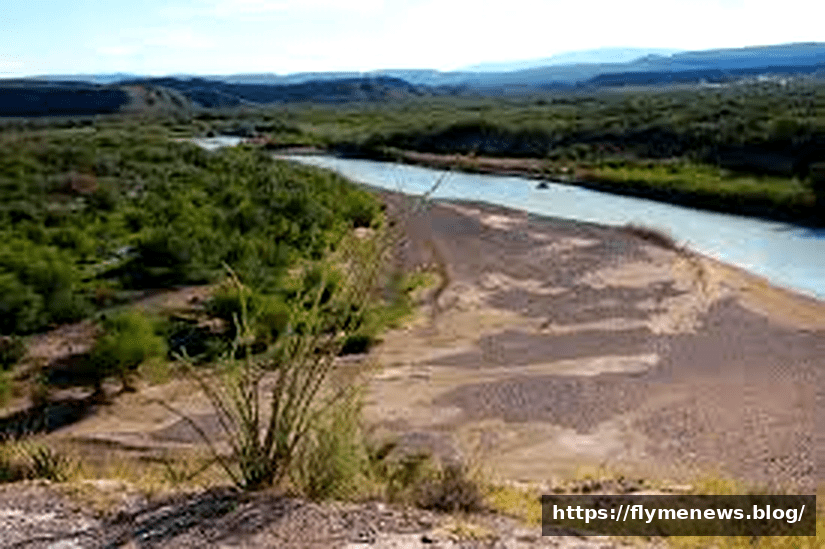
The Rio Grande Rio Bravo is much more than just a line on a map. It is a living, breathing entity that shapes the lives of millions of people and countless animals. Known by two names depending on which side of the border you stand, this river is a source of life in the vast North American desert. It is a place of incredible history, stunning natural beauty, and complex challenges. Think of it as the superhero of the Southwest, providing water for cities, farms, and ecosystems across two countries. It’s a river that brings together cultures, economies, and communities, showing us that nature truly knows no borders . Its story is not just about geography; it is about the people who depend on its flow, the wildlife that thrives in its riparian zones, and the urgent need to protect it for our future.
For many, it is simply called the “Rio Grande” in the United States, while in Mexico, it is proudly known as the Río Bravo or the Río Bravo del Norte . The dual name of Rio Grande Rio Bravo stems from early colonial times when explorers weren’t sure if the upper and lower parts of the river were connected . Today, this magnificent river runs over 1,900 miles, starting as a small, cold stream in the snowy peaks of Colorado and ending its journey as a warm, powerful force emptying into the Gulf of Mexico. This incredible body of water is a crucial artery for the entire region. It’s the heart that pumps life into a vast river basin covering over 182,000 square miles, nurturing a unique blend of landscapes, from high mountain forests to the breathtaking canyons of Big Bend National Park.
Table of Contents
The Historical Tapestry of the Rio Grande Rio Bravo
The history of the Rio Grande Rio Bravo is as deep and wide as the river itself. Long before it was a border, it was a home. Indigenous communities like the Pueblo people, who called it “Posoge” meaning “big river,” and the Navajo, who named it “Tó Ba’áadi,” have lived along its banks for generations . They understood its power and respected its role as a life-giver. To them, the river was sacred, providing not just water but also food, shelter, and a central part of their spiritual world. This connection is a vital part of the river’s identity and reminds us that its story began long before modern maps or political lines were drawn.
In 1598, a Spanish explorer named Juan de Oñate arrived at its banks, giving it the name “Rio Grande,” a name that would stick in the United States . Around the same time, the Spanish were already calling its lower course the “Río Bravo,” which means “bold” or “turbulent,” a perfect description for a river that can be calm one moment and wild the next. This area became a frontier, with the famous Camino Real, or Royal Road, following the river’s path, connecting distant cities and cultures . In 1848, the river’s fate was forever changed after the Mexican-American War. The Treaty of Guadalupe Hidalgo officially recognized the Rio Grande River as the international boundary between the United States and Mexico, a role it still plays today . This rich history shows how the Rio Grande Rio Bravo has always been a place where different worlds meet, exchange, and sometimes clash.
A Geographical Wonder: From Mountains to the Gulf
Starting in the San Juan Mountains of Colorado, the Rio Grande Rio Bravo begins its journey at an elevation of about 12,000 feet, fed by melting snow and mountain springs. It cuts through the heart of New Mexico, passing by historic cities like Albuquerque and Santa Fe before arriving at the bustling twin cities of El Paso, Texas, and Ciudad Juárez, Mexico. Here, it begins its role as the official border, separating the state of Texas from the Mexican states of Chihuahua, Coahuila, Nuevo León, and Tamaulipas . This 1,900-mile trek through deserts, mountains, and canyons makes it the fourth-longest river in North America, and its journey is a spectacular sight to behold .
The river’s path is full of dramatic scenery. It carves through the stunning canyons of the Big Bend region, including the famous Santa Elena, Mariscal, and Boquillas canyons, creating a true natural wonder that attracts visitors from around the world. It is here, in the middle of the Chihuahuan Desert, that the river feels most wild and untamed. As it moves further south, the landscape changes to broad, open valleys and tropical vegetation, especially in the Lower Rio Grande Valley, where it supports vast citrus groves and agricultural fields . But this mighty river doesn’t always reach the sea. Due to heavy water use, only a small percentage of its original flow now makes it to the Gulf of Mexico, a stark reminder of the pressures it faces .
The Rio Grande Rio Bravo as a Vital Water Source
The Rio Grande Rio Bravo is the main water supply for a staggering 16 million people living in the United States and Mexico . It is the economic and agricultural engine of the region, quenching the thirst of booming cities and providing water to over 1.8 million acres of farmland . Think about a juicy orange from Texas or a crunchy pecan from New Mexico; there is a good chance they were irrigated with water from this very river. Agriculture consumes a massive 85% of the river’s water, supporting a multi-billion dollar economy that produces cotton, citrus, vegetables, and beef . The river is truly the economic backbone of the entire region.
However, this vital resource is stretched incredibly thin. The demand for water is so high that it is often referred to as an “over-appropriated” river. This means more water is promised to users than the river can actually provide . This creates tension and challenges for everyone involved, from farmers who need it for their crops to cities that need it for drinking water. The situation is made worse by climate change, which brings hotter temperatures and more severe droughts, causing water levels to drop dangerously low in some years . This is why careful management and water conservation are so important to ensure this river can continue to sustain lives and livelihoods for decades to come.
The Border: A Shared and Complex Identity
The Rio Grande is famously known as “the border,” but for the communities that live on both sides, it is much more than a dividing line. It is a shared resource that has historically brought people together. Twin cities like Laredo and Nuevo Laredo, or Brownsville and Matamoros, grew up on opposite sides of the river, acting as international gateways for trade, culture, and family. They are connected by a shared history and a common need for the river’s water. This area is a unique “frontera,” a borderland where two cultures blend, creating a vibrant and distinct way of life .
Despite its unifying power, the river as a border also presents challenges. Issues related to immigration, border security, and the construction of border walls can complicate the relationship between the two countries. The river’s course is not fixed; it changes over time, leading to territorial disputes like the famous Chamizal dispute, which was settled in 1963 . But amid these challenges, the spirit of cooperation remains. Treaties like the 1944 Water Treaty between the U.S. and Mexico are a testament to the shared responsibility of managing the Rio Grande Rio Bravo for the benefit of all people and ecosystems in the basin .
Wildlife and Ecosystems of the Rio Grande Basin
The Rio Grande Rio Bravo is a critical habitat for a mind-blowing variety of wildlife. It acts as a green ribbon of life in the middle of a dry desert, creating what is known as a riparian ecosystem. This is a place where the presence of water transforms the land into a haven for plants and animals. One of the most spectacular sights is the migration of the ancient sandhill cranes, which travel thousands of miles to winter in the river’s wetlands . They, along with monarch butterflies and countless other birds, rely on the Rio Grande as a pit stop to rest and refuel. The river’s wetlands are oases in the desert.
The health of the Rio Grande River is also connected to the work of a fascinating creature: the beaver. Beavers are “nature’s engineers.” By building dams, they create ponds that slow water down, allowing it to soak into the ground and refill underground aquifers . This helps keep more water in the river and creates healthy habitats for other species. Conservation organizations like the World Wildlife Fund (WWF) and local partners are working hard to restore beaver populations by building beaver dam analogs to help the river recover . These efforts show how helping one animal can have a massive, positive impact on the entire ecosystem.
A River Under Pressure: Threats to the Rio Grande
The Rio Grande Rio Bravo is currently facing a serious crisis. For years, it has been listed as one of the most endangered rivers in the world . The primary threat is simply a lack of water. Climate change is making the region hotter and drier. At the same time, the demands for water from agriculture are increasing. This has led to severe water scarcity, with major stretches of the river drying up completely. Many experts fear that without significant changes, the river could become a seasonal stream rather than a permanent one.
Invasive species are another big problem. Non-native plants like the salt cedar tree, also known as tamarisk, are “water hogs.” They consume massive amounts of water and crowd out the native trees and plants that local wildlife depends on. This disrupts the delicate balance of the ecosystem . Conservationists are working hard to remove these invasive species and replace them with native vegetation to help the river heal. The Rio Grande needs all the help it can get, which is why restoration projects are so urgent. The future of this iconic river, and all the people and animals that depend on it, hangs in the balance.
Conservation Efforts: Restoring the Rio Bravo
Thankfully, many are fighting to save the Rio Grande Rio Bravo. A powerful example is the partnership between the World Wildlife Fund and Finish Dishwashing, which invested in on-the-ground projects to restore the river . This collaboration funded local groups like Trout Unlimited, Rio Grande Return, and Defenders of Wildlife. They have achieved some incredible wins, including replenishing over 4.8 billion gallons of water, restoring 148 acres of wetland, and improving flows along 423 miles of the river. They have even successfully encouraged beavers to return to their ancestral habitats .
These restoration projects show that positive change is possible. They focus on a “whole-basin” approach, meaning they look at the river as a single, connected system rather than just a border. By working across different states and even countries, they are finding common-ground solutions. These efforts include leasing water rights to keep water in the river, building beaver dam analogs, and removing invasive species . While the challenges are immense, these success stories give us hope. They prove that with collaboration and dedication, we can restore the health and vitality of the mighty Rio Grande Rio Bravo.
Frequently Asked Questions About the Rio Grande Rio Bravo
1. What is the difference between the Rio Grande and the Rio Bravo?
There is no physical difference. They are the same river. It is called the Rio Grande in the United States and the Rio Bravo (or Río Bravo del Norte) in Mexico. The two names come from colonial-era confusion and have stuck to this day .
2. How long is the Rio Grande Rio Bravo?
The river is approximately 1,896 miles (3,051 km) long. It is the fourth or fifth longest river in North America, depending on how it is measured .
3. Where does the Rio Grande start and end?
The Rio Grande begins as a snow-fed mountain stream in the San Juan Mountains of southern Colorado. It ends its journey at the Gulf of Mexico, near the city of Brownsville, Texas, and Matamoros, Mexico .
4. Why is the Rio Grande important?
It is a vital water source for over 16 million people and serves as a lifeline for agriculture, cities, and wildlife in the arid southwestern United States and northern Mexico. It also acts as the international border between the U.S. and Mexico for a large part of its course .
5. Is the Rio Grande in danger?
Yes, the Rio Grande is considered one of the most endangered rivers in the world. It faces significant threats from climate change, severe drought, and water overuse, primarily for agriculture, which has led to many stretches of the river running dry .
6. What is being done to protect the Rio Grande?
Numerous conservation efforts are underway. Organizations like the World Wildlife Fund are partnering with local groups to restore degraded ecosystems. Efforts include removing invasive species, restoring beaver populations, leasing water rights to keep water in the river, and promoting water-resilient farming practices .
Conclusion
The Rio Grande Rio Bravo is a true marvel of nature, a river that defies simple definition. It is a source of life, a historical landmark, a political border, and a home to a rich diversity of people and wildlife. From its humble beginnings in the Colorado mountains to its powerful flow into the Gulf of Mexico, it tells a story of connection and resilience. The challenges it faces from drought and water overuse are real and urgent, but the spirit of cooperation and conservation that surrounds it offers a powerful hope for its future. This river’s health is not just an environmental issue; it is a matter of survival for millions of people and countless species. Learning about the Rio Grande Rio Bravo is the first step in appreciating the precious resource we all share. Its story is our story, a reminder that we are all connected by the life-giving power of water.














Leave a Reply