
Air travel can save hours on long journeys, but poor planning can create stress before you even reach the airport. Missed check-in, heavy bags, unclear documents, and long security lines can quickly ruin a trip. The good news is that simple preparation makes flying easier. This guide covers booking, packing, airport arrival, safety, health, baggage, delays, and practical tips for a smoother journey.
Table of Contents
What Is Air Travel?
Air travel means traveling from one location to another using an aircraft. It includes domestic flights within one country and international flights that cross national borders.
Modern aviation connects cities, countries, businesses, families, and tourist destinations. Passengers can choose between different airlines, routes, aircraft types, cabins, and ticket options.
The experience usually includes several stages:
- Booking a flight
- Preparing travel documents
- Packing luggage
- Reaching the airport
- Checking in
- Passing security
- Boarding the aircraft
- Completing the flight
- Collecting baggage
- Leaving the destination airport
Understanding each stage helps travelers avoid common problems.
Why Is Air Travel So Popular?
The biggest advantage is speed.
A journey that could take many hours or even days by road or rail can often be completed by air in a much shorter time. This makes flights useful for business trips, holidays, family visits, education, and international travel.
Air travel also connects remote destinations with major transportation hubs.
For long-distance journeys, travelers often value:
- Faster travel times
- Wider destination choices
- Frequent flight schedules
- International connections
- Convenient airport services
- Different ticket classes
- Loyalty and rewards programs
The best choice depends on your destination, budget, schedule, and personal needs.
How Should You Plan Air Travel?
Good planning starts before you purchase a ticket.
First, identify your destination and preferred travel dates. Then compare flight times, connection lengths, baggage rules, airport locations, and the total ticket cost.
Do not compare only the advertised fare. A cheaper ticket can become more expensive after baggage, seat selection, meals, airport transfers, or change fees.
Before departure, the FAA recommends checking airport status, weather information, baggage guidance, and airline updates.
A simple planning checklist includes:
- Choose your destination.
- Compare available flights.
- Check passport and visa requirements.
- Review baggage rules.
- Confirm the airport and terminal.
- Check your airline’s flight updates.
- Arrange transportation to the airport.
- Keep important documents accessible.
How Early Should You Reach the Airport?
The right arrival time depends on the airport, airline, destination, and time of day.
International flights often require more preparation because passengers may need to complete immigration and customs procedures. Busy airports can also require more time for parking, transportation, check-in, and security.
The FAA recommends giving yourself enough buffer time, especially for international journeys where customs, immigration, and baggage procedures can take longer.
Before leaving home, check:
- Flight status
- Airport traffic
- Terminal information
- Check-in deadline
- Security requirements
- Transportation conditions
- Weather
Arriving early is usually less stressful than rushing through the airport.
What Should You Pack for Air Travel?
Packing correctly can make your journey much easier.
Separate essential items from everything else. Keep your passport, identification, medication, phone, wallet, and important documents where you can access them quickly.
Your carry-on can include useful items such as:
- Travel documents
- Phone and charger
- Prescription medication
- Small personal items
- Headphones
- A light jacket
- Important valuables
- Basic travel toiletries
Check your airline’s specific baggage limits before packing. IATA notes that carry-on allowances vary by airline, cabin class, and aircraft type.
Do not assume that another airline follows the same baggage rules.
What Are the Main Baggage Rules?
Baggage rules differ between airlines and routes.
Your ticket may include checked baggage, carry-on baggage, or neither. Some fares also have different weight and size limits.
IATA states that airline conditions of carriage apply to baggage acceptance, while carry-on allowances can vary by airline and cabin.
Before traveling, check:
- Number of permitted bags
- Maximum weight
- Maximum dimensions
- Carry-on allowance
- Personal-item rules
- Restricted items
- Sports equipment rules
- Excess baggage charges
Measuring your luggage at home can prevent surprises at the airport.
What Should You Know About Airport Security?
Airport security protects passengers, staff, aircraft, and airport facilities.
The exact screening process depends on the country and airport. Travelers should follow instructions from security personnel and check the official rules for their departure airport.
For flights departing from the United States, TSA provides current guidance on permitted and prohibited items. The FAA also directs passengers to TSA information for baggage security requirements.
Before security, keep essential documents easy to reach.
Avoid packing questionable items simply because you are unsure whether they are permitted. Check the official airport or aviation security authority instead.
What Should Passengers Know About Flight Safety?
Flight safety is a shared responsibility.
The FAA advises passengers to pay attention to the safety briefing, read the safety card, locate emergency exits, and keep their seat belt fastened while seated.
During your flight:
- Listen to cabin crew instructions.
- Keep your seat belt fastened while seated.
- Follow electronic-device rules.
- Keep the aisle clear.
- Follow exit-row requirements.
- Pay attention during takeoff and landing.
- Follow instructions during turbulence.
The safety briefing may feel familiar to frequent travelers, but it provides aircraft-specific information.
What Should You Do During Turbulence?
Turbulence can feel uncomfortable, but passengers can reduce injury risk by following basic safety practices.
The most important habit is wearing your seat belt whenever you are seated. The FAA specifically advises passengers to keep their seat belts fastened while seated because turbulence can cause unexpected movement.
If turbulence begins:
- Stay seated when possible.
- Keep your seat belt fastened.
- Follow crew instructions.
- Avoid standing unnecessarily.
- Secure loose personal items.
Do not assume that clear skies mean turbulence cannot occur.
How Does Air Travel Affect Your Health?
Most passengers complete flights without major health problems, but long journeys can create specific challenges.
The CDC notes that airplane travel, particularly flights longer than four hours, can increase the risk of blood clots such as deep vein thrombosis and pulmonary embolism.
For longer trips, travelers can discuss personal risk factors with a healthcare professional.
General travel habits can also help:
- Drink fluids regularly.
- Move around when appropriate.
- Avoid sitting in one position for the entire journey.
- Follow medical advice.
- Carry necessary medication.
- Keep important health information accessible.
People with specific medical conditions should seek professional advice before traveling.
What Is Jet Lag?
Jet lag can happen when your internal body clock becomes misaligned with the local time at your destination.
It is especially common after crossing several time zones.
Travelers may experience:
- Tiredness
- Difficulty sleeping
- Reduced concentration
- Changes in appetite
- General discomfort
For international trips, adjusting your sleep schedule gradually can help.
Light exposure also influences the body’s internal clock. A healthcare professional can provide personalized advice if jet lag creates serious problems.
How Can You Make International Air Travel Easier?
International flights require more preparation than many domestic trips.
You may need:
- A valid passport
- Visa or entry authorization
- Proof of onward travel
- Accommodation information
- Travel insurance
- Health documents
- Customs information
The FAA recommends checking destination travel advisories, health guidance, customs requirements, and immigration procedures before international travel.
Do not wait until the day before departure to check visa requirements.
Rules can depend on your nationality, destination, transit country, passport validity, and purpose of travel.
How Can You Handle Flight Delays?
Flight delays can happen because of weather, airport congestion, aircraft issues, air traffic restrictions, or other operational factors.
The best response is preparation.
Keep these items accessible:
- Phone
- Charger
- Travel documents
- Medication
- Water
- Important contact details
- Basic snacks
Check your airline’s official flight updates rather than relying only on social media posts.
If a delay affects a connection, contact the airline as soon as possible. Ask about rebooking options and follow the carrier’s instructions.
What Happens If Your Baggage Is Lost?
Lost or delayed baggage can be frustrating, but quick action helps.
If your checked bag does not arrive, report it to the airline’s baggage service area before leaving the airport when possible.
Keep your:
- Baggage claim tag
- Boarding pass
- Flight information
- Bag description
- Contact details
- Receipts for eligible expenses
Baggage procedures vary by airline and route. Read the carrier’s conditions of carriage for the applicable rules.
Do not place essential medication or irreplaceable items in checked luggage when you can safely keep them with you.
How Can You Make Air Travel More Comfortable?
Comfort starts with preparation.
Choose clothing that allows easy movement. For longer flights, consider layers because cabin temperatures can feel different from the conditions outside.
A small comfort kit can contain:
- Neck support
- Headphones
- Eye mask
- Light sweater
- Water bottle when permitted
- Personal entertainment
- Moisturizer or other personal-care items
Seat selection can also affect comfort. Your best choice depends on whether you prefer window views, easier aisle access, or extra legroom.
How Can Families Improve Air Travel?
Traveling with children requires additional planning.
Keep essential items within easy reach. Pack snacks, entertainment, spare clothing, and necessary medication in your carry-on.
The FAA provides specific passenger safety guidance for children, including the use of approved child safety seats or devices where applicable.
Parents should also explain basic airport and aircraft rules before the journey.
Simple preparation can make the trip calmer for children and adults.
How Can Older Travelers Prepare for a Flight?
Older passengers may benefit from additional planning, especially on long journeys or when mobility support is needed.
Contact the airline before departure if you require assistance at the airport or during boarding.
Keep medical information and essential medication accessible.
If you have a health condition, discuss travel plans with your healthcare provider. The CDC recommends consulting a healthcare professional before international travel when destination-specific health planning is needed.
Planning assistance in advance can reduce stress at the airport.
What Are the Best Air Travel Safety Habits?
Small habits can make a major difference.
Before departure
- Check your flight status.
- Review baggage rules.
- Confirm your documents.
- Check weather conditions.
- Charge your devices.
At the airport
- Arrive with enough time.
- Follow security instructions.
- Keep valuables secure.
- Watch official flight displays.
- Stay aware of gate changes.
During the flight
- Listen to the crew.
- Keep your seat belt fastened.
- Follow electronic-device rules.
- Secure loose items.
- Follow evacuation instructions if necessary.
The FAA emphasizes that passengers play an important role in cabin safety.
Complete Air Travel Planning Table
| Travel Area | What to Check | Why It Matters |
| Flight booking | Route, time, fare | Helps control cost and schedule |
| Passport | Validity | Required for many international journeys |
| Visa | Destination rules | Prevents entry problems |
| Airport | Terminal and location | Reduces confusion |
| Flight status | Delays and changes | Helps manage time |
| Baggage | Weight and size | Prevents extra charges |
| Carry-on | Allowed items | Makes security easier |
| Security | Screening rules | Prevents prohibited-item problems |
| Health | Medical needs | Supports safer travel |
| Insurance | Coverage | Helps manage unexpected costs |
| Accommodation | Booking details | Supports arrival planning |
| Transportation | Airport transfer | Prevents last-minute problems |
| Emergency contacts | Important numbers | Provides backup support |
| Weather | Departure and arrival | Helps with delays and packing |
| Seat | Location and needs | Improves comfort |
Air Travel Checklist for Your Next Trip
Use this quick checklist before leaving home:
Documents
- Passport or identification
- Visa if required
- Boarding information
- Travel insurance documents
- Accommodation details
Luggage
- Check baggage allowance
- Weigh checked luggage
- Check carry-on size
- Remove restricted items
Technology
- Charge phone
- Pack charging equipment
- Download important travel information
- Keep devices accessible
Health
- Pack required medication
- Carry important health information
- Review destination health advice
- Plan for long-flight comfort
Airport
- Check flight status
- Confirm terminal
- Plan transportation
- Leave enough time for airport procedures
Air Travel: Quick Comparison of Travel Options
| Factor | Air Travel | Train | Bus | Car |
| Long-distance speed | Excellent | Good | Moderate | Moderate |
| Route flexibility | Moderate | Low to moderate | Moderate | Excellent |
| Airport procedures | Required | Usually simpler | Usually simpler | None |
| Long-distance comfort | Good | Often good | Varies | Depends on vehicle |
| International reach | Excellent | Limited by geography | Limited | Limited |
| Best use | Long distances | Connected rail routes | Budget travel | Flexible road trips |
| Baggage rules | Airline-specific | Operator-specific | Operator-specific | Flexible |
No option is best for every journey. The right choice depends on distance, time, cost, comfort, and destination.
Frequently Asked Questions
What is air travel?
Air travel is transportation between locations using aircraft. It includes domestic and international passenger flights.
Is air travel safe?
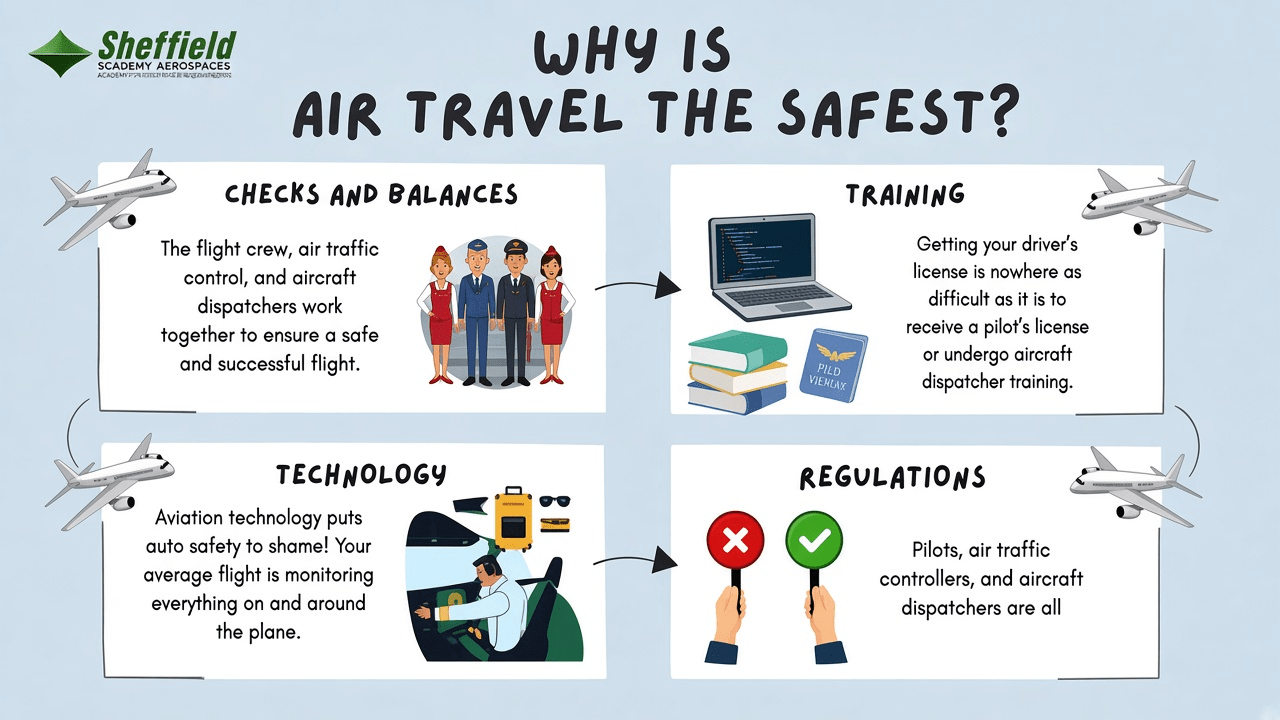
Commercial aviation operates under extensive safety standards. The FAA regulates and oversees many parts of the U.S. aviation system, while passengers also have a role in following cabin safety instructions.
What should I pack for air travel?
Pack your required documents, medication, valuables, electronics, and essential personal items in accessible luggage. Always check the specific airline’s baggage rules before departure.
How early should I arrive for a flight?
The ideal arrival time depends on the airport, airline, route, and whether the flight is domestic or international. International travel usually needs more time for check-in, security, immigration, and customs.
What health issues should I consider before flying?
Long flights can increase the risk of blood clots for some travelers. The CDC recommends discussing health concerns with a healthcare professional and reviewing destination-specific health advice before travel.
How can I make my flight more comfortable?
Choose comfortable clothing, organize your carry-on carefully, stay hydrated, move when appropriate, and keep important items within reach. For longer flights, plan for sleep and changing time zones.
Final Thoughts
Air travel becomes much easier when you prepare before reaching the airport. Check your documents, understand baggage limits, monitor your flight, pack essential items carefully, and follow cabin safety instructions.
For international journeys, give extra attention to entry rules, health guidance, insurance, and customs requirements. For long flights, think about comfort and health before boarding.
A few minutes of preparation can prevent hours of stress. Before your next trip, use the checklist above and confirm the latest requirements directly with your airline, airport, and relevant government authorities.






Leave a Reply