
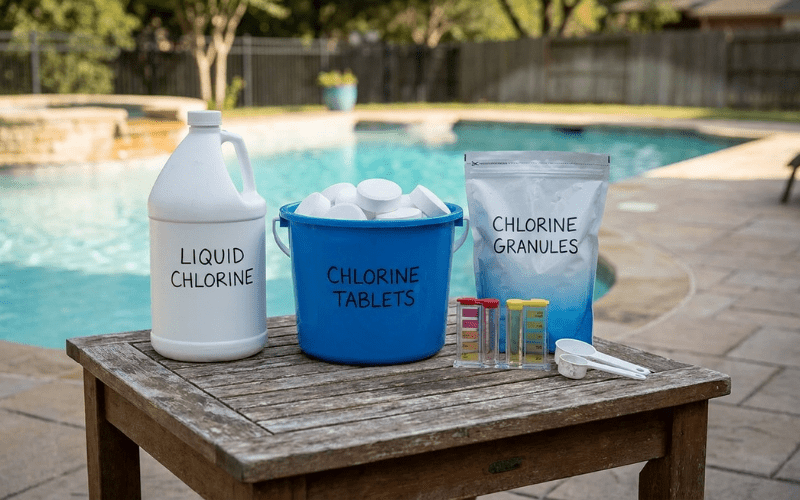
New pool owners often reach the same point very quickly. They know the pool needs chlorine, but they are not sure which type makes the most sense for everyday care. Liquid chlorine looks simple. Tablets seem convenient. Granules appear flexible. Each option has a place, but they do not work in exactly the same way.
That is why routine pool care becomes confusing for many beginners. The question is not only which chlorine product works. All three can work. The better question is which one fits the way the pool is used, tested, and maintained over time.
For most owners, the best choice depends on three things. First, how much control they want over dosing. Second, how often they are willing to check and adjust the water. Third, whether they want a steady maintenance method or a more flexible corrective tool. Once those points are clear, the differences between liquid chlorine, tablets, and granules become much easier to understand.
Why the Form of Chlorine Matters
Many beginners assume chlorine is just chlorine. In practice, the form changes how it is added, how quickly it works, and how it fits into a maintenance routine.
Different Products Support Different Habits
A pool owner who wants simple, steady sanitation may prefer one format. Another owner who wants fast correction after testing may prefer another. The cleaner and easier a routine feels, the more likely it is to stay consistent.
Routine Care Is About More Than Sanitizing
The right chlorine product should not only sanitize the pool. It should also fit the owner’s real schedule. A good routine is one that can actually be followed week after week.
Liquid Chlorine Gives Direct and Fast Control
Liquid chlorine is one of the clearest options to understand. It is added directly to the pool water and starts working quickly.
Liquid Chlorine Is Good for Precise Adjustments
Many pool owners like liquid chlorine because it gives direct control. If testing shows chlorine is low, the owner can calculate the needed increase and add a measured amount. That makes it useful for people who want to respond based on actual readings instead of relying on a slow-release method.
This is why the question how much chlorine to add to pool often comes up most naturally with liquid chlorine. The product is commonly used when owners want a targeted correction based on pool volume and current water conditions.
It Works Fast but Needs More Attention
Liquid chlorine is practical, but it usually requires more regular handling. It does not sit in the pool and release slowly over time the way tablets do. That means owners need to test the water and add more chlorine as needed.
For people who do not mind checking the pool often, this can be a strength. For people who want a lower-touch routine, it may feel less convenient.
Tablets Are Convenient for Steady Routine Use
Chlorine tablets are often the first product beginners notice because they seem easy to manage. They can be placed in a floater or feeder and dissolve slowly over time.
Tablets Support a More Passive Routine
This is their biggest advantage. Tablets can help maintain chlorine levels gradually instead of requiring direct manual dosing every time the pool needs support. For busy owners, that can make routine care feel simpler.
In a pool with steady conditions, tablets can help reduce the feeling that chlorine must be added constantly by hand.
Tablets Are Not Always Ideal for Every Situation
The convenience of tablets can also create blind spots. Because they dissolve slowly, they are not always the best tool for quick correction. If the pool is already low on chlorine, tablets may not raise the level fast enough on their own.
They also should not be treated as a reason to stop testing. A pool can still drift out of balance even when tablets are being used regularly.
Granules Sit Somewhere in the Middle
Granular chlorine often feels like a middle-ground option. It is not as passive as tablets, but it can still be easy to store and use when the pool needs support.
Granules Offer Flexibility
Granules can be useful for owners who want more control than tablets provide but do not always want to rely on liquid chlorine. They are often used when a pool needs a measured addition or when the owner wants a product that can be kept on hand for regular or occasional use.
They Still Require Good Dosing Habits
Granules are not a “pour and forget” solution. Like liquid chlorine, they work best when added with some care and based on water testing. Used correctly, they can support routine maintenance well. Used casually, they can make chemistry feel less predictable.
Which Option Makes the Most Sense for Everyday Care
There is no single answer for every pool, but there are some clear patterns.
Liquid Chlorine Makes Sense for Owners Who Want Control
Liquid chlorine usually fits best when the owner:
- tests the pool regularly
- wants fast correction
- prefers direct dosing
- is comfortable making measured adjustments
It is a strong option for people who want to understand exactly how the pool responds.
Tablets Make Sense for Owners Who Want Simplicity
Tablets usually fit best when the owner:
- wants a steadier maintenance method
- prefers less frequent manual dosing
- values convenience in routine care
- still plans to test and monitor the pool consistently
They are often attractive for households that want a more set-it-and-monitor-it rhythm.
Granules Make Sense for Owners Who Want Flexibility
Granules often fit best when the owner:
- wants a practical backup or supplement
- prefers a product that is easy to store
- wants more direct input than tablets
- does not always want to use liquid chlorine
They can work well in routines that are a little more hands-on.
The Best Choice Also Depends on Pool Conditions
Product choice is not only about personal preference. Pool conditions matter too.
Outdoor Pools Need Consistent Attention
Sun, heat, debris, and swimmer load all affect chlorine demand. A pool with changing conditions may need a routine that allows easy adjustment, not just passive maintenance.
Some Owners Use More Than One Form
Routine care does not always have to depend on one format alone. Some owners prefer one main method and keep another form available for correction when the pool needs extra support. What matters most is understanding why each one is being used.
Common Mistakes Beginners Make
The biggest mistake is assuming convenience removes the need for testing.
Tablets Do Not Eliminate Water Checks
Because tablets look simple, some owners assume they can just keep feeding tablets and stop thinking about chlorine levels. That usually leads to poor control and confusion later.
Fast-Acting Chlorine Is Not a Substitute for Routine
Some owners rely on quick manual additions but do not maintain a real schedule. That can make pool care feel reactive instead of steady.
Product Choice Does Not Replace Good Habits
No chlorine format can fix poor testing habits, skipped maintenance, or guesswork. The best product is still only part of the full routine.
What New Pool Owners Should Keep in Mind
If routine care is the main goal, the best chlorine option is often the one that the owner can use consistently and correctly.
Ask Simple Questions First
Before choosing, it helps to ask:
- Do I want steady maintenance or quick direct control?
- Am I willing to test often?
- Do I want convenience or flexibility?
- Does my pool need frequent correction or stable upkeep?
These questions usually matter more than marketing claims.
Final Thoughts
Liquid chlorine, tablets, and granules can all make sense for routine pool care, but they support different styles of maintenance. Liquid chlorine gives fast and direct control. Tablets offer gradual convenience. Granules provide flexible support between those two approaches.
The right answer depends on how the owner wants to manage the pool in real life. A good routine is not built around whichever chlorine sounds best in theory. It is built around the option that fits the pool’s needs and the owner’s habits.
Once that is clear, chlorine decisions become much less confusing. Instead of asking which product is universally best, owners can ask which one makes the routine easier to maintain well over time.














Leave a Reply